While banks often require extensive documentation, collateral, or lengthy approval processes, many Nigerians find themselves turning to informal money lenders popularly known as loan sharks. Across Nigeria, millions of people struggle daily with financial hardship. Rising inflation, unemployment, underemployment, stagnant wages, high business costs, medical emergencies, school fees, and unexpected expenses have left many households searching for quick financial relief.
At first glance, these lenders appear to provide a lifeline. Loans are approved within minutes or hours, with little or no paperwork. To someone desperately trying to pay rent, keep a business afloat, settle hospital bills, or provide food for their family, this speed can feel like salvation.
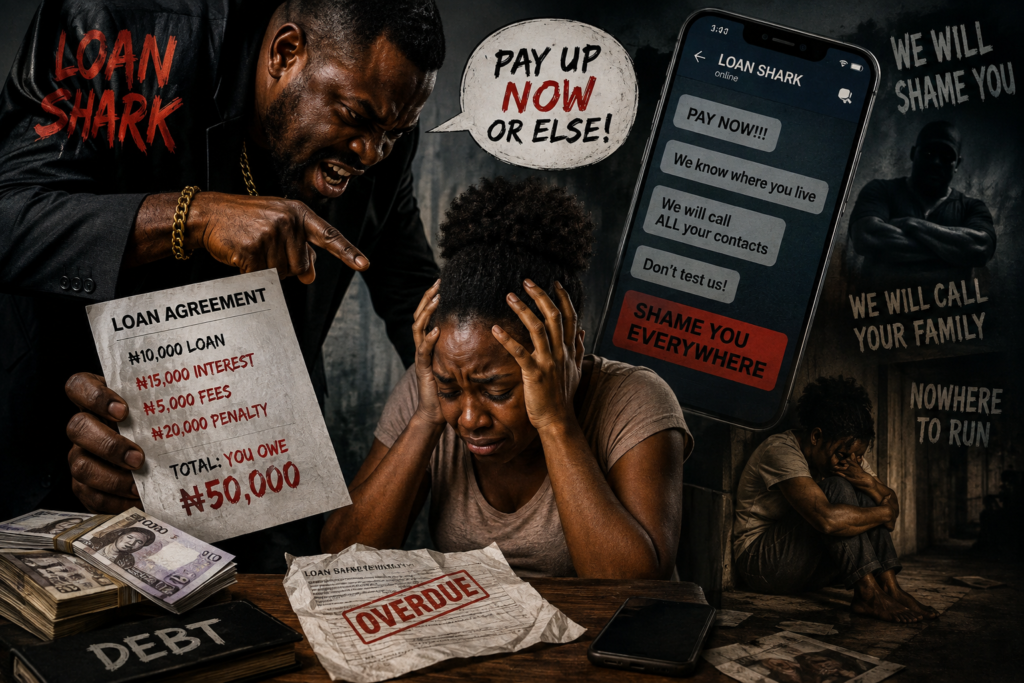
However, beneath the promise of quick cash lies a dangerous financial trap. Many borrowers soon discover that the true cost of these loans extends far beyond interest payments. Loan sharks often charge excessive interest rates, impose hidden fees, employ intimidation tactics, publicly shame borrowers, harass family members and employers, seize property, and create cycles of debt that are almost impossible to escape.
The consequences are devastating, not only for borrowers but also for their families, businesses, workplaces, and society as a whole.
Understanding Loan Sharks
A loan shark is an individual or lending organization that offers loans under unfair, exploitative, or abusive terms. While some operate completely outside the law, others appear legitimate but engage in unethical lending practices through hidden charges, exorbitant interest rates, misleading contracts, or aggressive debt recovery methods.
Some common characteristics include of loan sharks:
- Extremely high interest rates
- Very short repayment periods
- Daily or weekly repayment schedules
- Excessive penalties for missed payments
- Harassment through phone calls and messages
- Contacting family, friends, colleagues, employers, and even strangers found in borrowers’ contact lists
- Public humiliation through social media or mass messaging
- Threats and intimidation
- Lack of transparency regarding loan terms
Technology has made this problem even worse. Mobile loan apps now allow borrowers to receive money within minutes. While many digital lenders operate responsibly, others exploit borrowers’ desperation by requesting extensive phone permissions, enabling them to access contact lists and use personal information during debt recovery.
Why Nigerians Turn to Loan Sharks
Most borrowers do not wake up intending to borrow from exploitative lenders or loan sharks. Many are pushed by circumstances beyond their control. These include:
1. Rising Cost of Living
Inflation has significantly increased the prices of food, transportation, rent, electricity, healthcare, and education. Families often struggle to survive until their next income.
2. Unemployment and Underemployment
Many Nigerians either have no jobs or earn incomes insufficient to meet basic needs.
3. Medical Emergencies
Unexpected illnesses frequently force families to seek immediate loans.
4. School Fees
Parents desperate to keep children in school often borrow under unfavorable conditions.
5. Business Cash Flow Problems
Small businesses frequently need emergency capital to restock inventory, pay salaries, or cover operating expenses.
6. Limited Access to Traditional Credit
Banks often require collateral, guarantors, credit history, or extensive documentation that many Nigerians cannot provide.
The Psychological Trap
Loan sharks often market themselves using phrases such as:
- “Instant approval.”
- “No collateral.”
- “Money in five minutes.”
- “No paperwork.”
- “Borrow now.”
These advertisements specifically target people under emotional stress. When someone faces eviction, hunger, hospital bills, or school deadlines, long-term consequences become secondary to immediate survival.
This vulnerability is exactly what exploitative lenders (loan sharks) capitalize on.
The Impact on Individuals
1. Endless Debt Cycles
One of the most damaging effects is debt trapping. A borrower who takes a small loan may find that accumulated interest and penalties make repayment nearly impossible.
Unable to repay, they borrow again from another lender. Soon they are servicing multiple loans simultaneously. Instead of solving financial problems, borrowing creates larger ones.
2. Mental Health Challenges
Debt-related stress contributes to:
- Anxiety
- Depression
- Panic attacks
- Insomnia
- Feelings of hopelessness
- Emotional exhaustion
Many borrowers constantly fear incoming calls or messages from lenders. The shame associated with harassment often causes social withdrawal.
3. Loss of Privacy
Some unethical lenders access borrowers’ contact lists and begin contacting:
- Family members
- Friends
- Employers
- Church members
- Business associates
Private financial struggles become public humiliation.
4. Reduced Productivity
Borrowers overwhelmed by debt often struggle to concentrate at work. Constant phone calls, threats, and emotional distress reduce productivity and job performance. Some even lose employment due to repeated workplace harassment.
5. Increased Risk of Suicide
Financial shame has been linked globally to severe emotional distress.Although not every borrower reaches this point, overwhelming debt combined with public humiliation can contribute to suicidal thoughts in vulnerable individuals.
This highlights the need for compassionate debt recovery practices and access to mental health support.
The Impact on Families
Debt rarely affects only one person. Entire households often suffer.
Marital Conflict
Financial pressure is one of the leading causes of marital disagreements.
Loan shark harassment can lead to:
- Arguments
- Distrust
- Emotional distance
- Domestic conflict
- Separation or divorce
Children’s Well-being
Children may experience:
- School interruption
- Poor nutrition
- Emotional distress
- Exposure to family conflict
- Reduced educational opportunities
Some children witness aggressive recovery agents visiting their homes. Such experiences create long-lasting psychological trauma.
Family Reputation
When loan sharks contact relatives, entire families become associated with debt. Relationships become strained. Borrowers may avoid social gatherings due to embarrassment.
Increased Poverty
Instead of helping families escape financial hardship, loan sharks often deepen poverty. Interest payments consume money that could otherwise pay for:
- Food
- Rent
- Healthcare
- Education
- Savings
The Impact on Businesses
Small and Medium Enterprises (SMEs) form the backbone of Nigeria’s economy. Unfortunately, many entrepreneurs rely on expensive short-term loans.
The consequences include:
Reduced Profitability
High interest payments reduce business profits.
Business Closure
Businesses unable to repay loans may:
- Lose inventory
- Sell equipment
- Lay off workers
- Shut down permanently
Poor Cash Flow
Frequent repayments reduce working capital. Businesses struggle to restock products or invest in growth.
Fear of Expansion
Entrepreneurs become hesitant to pursue new opportunities after negative borrowing experiences.
Job Losses
When businesses fail, employees lose their livelihoods. The impact extends beyond business owners to entire communities.
Social Consequences
Loan shark activities affect society in several ways.
Increased Poverty
Communities become trapped in financial instability.
Reduced Consumer Spending
Debt repayment reduces disposable income, slowing economic activity.
Criminal Activity
Extreme financial pressure may push some individuals toward fraud, theft, or other illegal activities in attempts to repay debts.
Declining Trust in Financial Institutions
Negative experiences with predatory lenders can discourage people from seeking legitimate financial services in the future.
Digital Loan Apps: A New Generation of Loan Sharks?
Nigeria’s digital lending industry has expanded rapidly. Many licensed digital lenders provide valuable services.
However, some operators have been accused of:
- Excessive interest rates
- Hidden charges
- Defamatory debt collection
- Data privacy violations
- Harassment of contacts
- Threats and intimidation
Regulatory agencies have taken action against several operators, but concerns remain about consumer protection and responsible lending practices.
Why Regulation Matters
Effective regulation helps:
- Protect borrowers
- Promote responsible lending
- Prevent abusive debt collection
- Encourage financial inclusion
- Build public confidence
Strong consumer protection laws should ensure transparency, fair interest rates, data privacy, and ethical recovery methods.
What Individuals Can Do
Before borrowing:
- Compare different lenders.
- Read all loan terms carefully.
- Calculate the total repayment amount.
- Borrow only what is necessary.
- Have a realistic repayment plan.
- Avoid taking one loan to repay another whenever possible.
- Build an emergency savings fund, even if gradually.
If experiencing harassment from loan sharks:
- Keep records of calls, messages, and threats.
- Report unlawful practices to the appropriate regulators.
- Seek financial counselling where available.
- Reach out to trusted family or community members for support rather than facing the burden alone.
The Role of Government
Government institutions can help by:
- Expanding affordable credit for small businesses.
- Strengthening consumer protection laws.
- Enforcing ethical lending standards.
- Promoting financial literacy.
- Supporting job creation and income growth.
- Improving access to formal banking and microfinance services.
The Role of Financial Institutions
Banks and licensed lenders should:
- Simplify loan application processes.
- Increase access to small emergency loans.
- Improve customer education.
- Offer flexible repayment options.
- Treat borrowers with dignity and respect.
When legitimate credit becomes more accessible, fewer people feel compelled to seek help from exploitative lenders.
Community Responsibility
Religious organizations, schools, employers, civil society organizations, and community leaders all have a role to play.
Financial literacy programs can teach:
- Budgeting
- Saving
- Responsible borrowing
- Debt management
- Business planning
Early financial education can prevent many people from falling into debt traps.
Conclusion
Loan sharks thrive where desperation meets limited financial options. While they may appear to offer immediate relief, the long-term consequences often outweigh the short-term benefits. Individuals can become trapped in cycles of debt, families may experience conflict and hardship, businesses can collapse under the weight of excessive interest, and communities bear the broader social and economic costs.
Addressing this challenge requires more than warning people against borrowing. It calls for stronger regulation of lending practices, improved financial literacy, wider access to affordable and transparent credit, and ethical debt recovery standards that respect human dignity. At the same time, borrowers should take time to understand loan terms, assess their repayment capacity, and explore safer alternatives before accepting high-cost loans.
Reducing dependence on exploitative lending is not only a financial issue; it is a matter of protecting livelihoods, preserving family stability, supporting entrepreneurship, and promoting sustainable economic development. A fair lending environment benefits everyone by helping individuals and businesses recover from temporary financial setbacks without becoming trapped in long-term hardship.